Community Partners & Human Services
Every family that walks through your door has already told their story five times this month. Family Thread carries one consented family record across schools, hospitals, county agencies, and community partners — so your caseworkers can skip the form and start the work.
Powered by Mira — your AI companion
The Problem
Every system is doing its job. The family is still lost in the handoffs. The same story gets told six times across six different intake forms — and families give up before help arrives.
Re-intake fatigue is real.
Families tell the same story 6 times. Many give up before help arrives.
The Social Worker Problem
The number of active cases per worker vs. evidence-based caseload guidelines
Annual turnover across community-based social work — driven by burnout and admin fatigue
Of a social worker's day spent on documentation, intake, and reporting — not direct family work
Families cycling in and out of services because no one sees the full picture across organizations
Mira as Social Worker Copilot
Universal intake — families share their story once, in their language, by text or voice
Auto-drafted case notes from every contact — ready for human approval
Closed-loop referral tracking across housing, food, employment, healthcare, and benefits
Scheduled follow-up between visits so no family is forgotten
A consented family record that travels across schools, hospitals, and partner agencies
Every action is human-approved. Nothing autonomous.
Platform
Mira works wherever families and social workers intersect — and currently losing families in the handoffs.
County Human Services
Adult services caseworkers
TANF / SNAP navigators
Housing program staff
Benefits enrollment specialists
Behavioral health coordinators
~340K U.S. human services social workers
Community-Based Orgs
Community Action Agency family advocates
Shelter and rapid-rehousing case managers
Continuum of Care navigators
Food bank case workers
Faith-based partner liaisons
~120K community-based case managers
Workforce & Higher-Ed
College basic-needs center staff
Student care team coordinators
Workforce support navigators
Re-entry program case managers
Employer EAP counselors
~40K embedded social workers
Case Study · Family Resource Center
Reference profile: Riverbend Community Action Agency · Serves 14 counties · 62 family advocates and case managers across housing, energy assistance, Head Start family services, and benefits navigation
The Situation
Riverbend's family advocates carried 80–110 active families each. A single family seeking help with rent, utility assistance, food, and Head Start enrollment had to fill out four separate intake forms. Referrals to outside partners (legal aid, behavioral health, workforce) happened — but no one tracked whether the family ever connected. Roughly 35% of services authorized in the system were never actually utilized.
What Mira Did
Mira became the front door: families intake once via text or voice, in any language. The advocate inherits a full picture — needs ranked, eligibility surfaced, prior services from partner agencies visible. After every contact, Mira drafts the case note, schedules follow-ups, and tracks each referral until the family confirms they received the service. Advocates approve, supervise, and provide the human relationship.
NO RE-INTAKE
1 form
Replaces 4+ partner intakes — families tell their story once
REAL DELIVERY
+38%
Of authorized services actually utilized by families (vs. baseline 65%)
TIME BACK
–60%
Time advocates spend on documentation per case
SAVED
$2.4M
Avoided staff turnover + grant compliance recapture per year
Real Impact
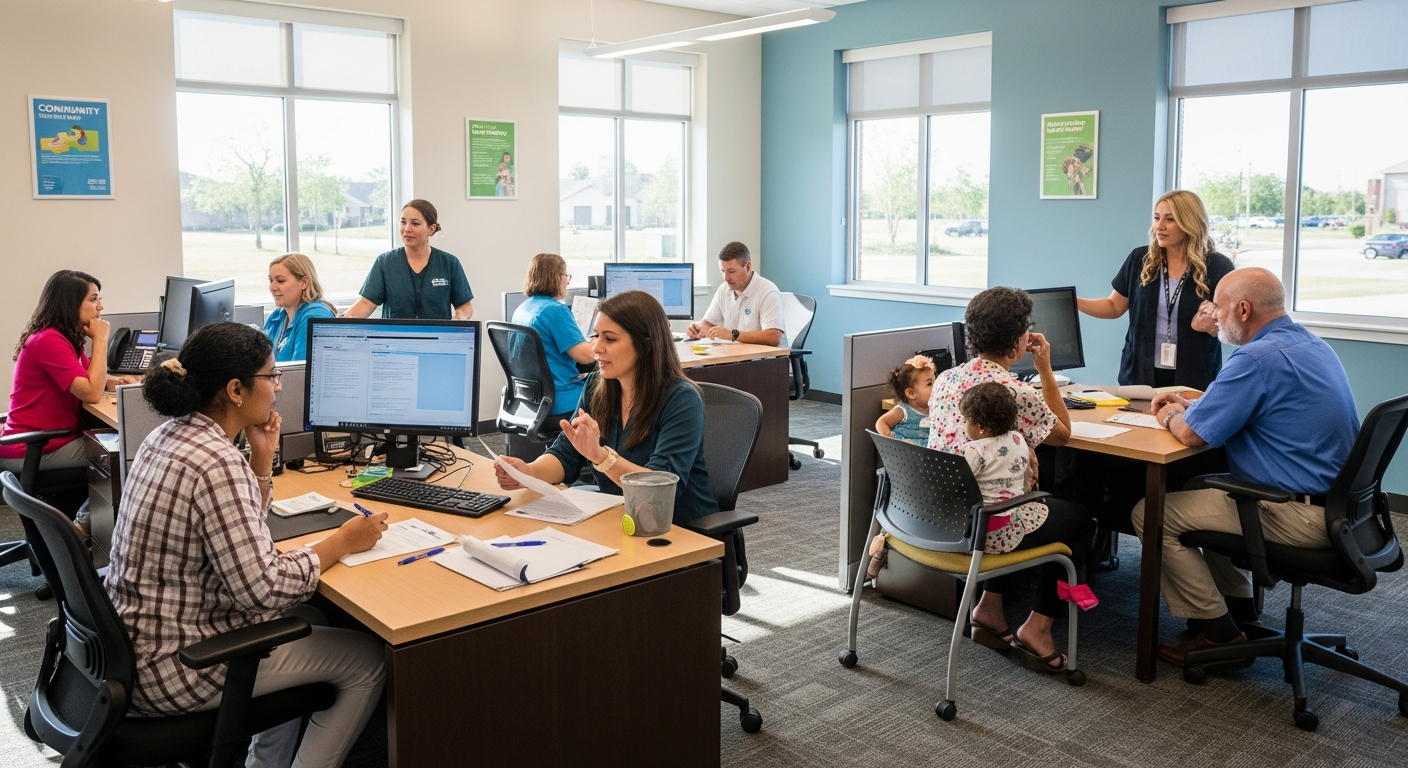
Toggle between before and after to see how a typical community family advocate's day shifts with Mira. The persona below is a composite drawn from real frontline workflows — names and quotes are illustrative, not testimonials.

Family Advocate · Housing & Stability
James Carter, MSW
Riverbend Community Action Agency
Fictional name and organization
"A mom would walk in needing rent help, food, and her kids enrolled in Head Start. I'd hand her three different intake packets and tell her to come back next week with documents. Half the time she didn't come back — not because she didn't need help, but because the process wore her down. I knew I was losing families."
80–110 active families per advocate — well above what the work supports
Families filling out 4+ separate intake forms across partner programs
Referrals to legal aid, behavioral health, workforce — with no way to confirm follow-through
~35% of authorized services never utilized because families couldn't navigate the next step
Case notes typed manually after-hours, on personal time, to keep grant compliance intact
Illustrative scenario built from typical workflows of community family advocates and housing case managers. Quote, name, and organization are fictional and do not represent a specific person or customer. Stock photography used with license.
1
Universal intake replaces 4+ partner forms
+38%
Authorized services actually delivered
–60%
Documentation time per case
The ROI
For a 50-social-worker organization, the theoretical value generated by Mira in year one — before counting improved outcomes.
Hours returned per SW per week (conservative)
8 hrs
FTE-equivalent capacity unlocked across 50 SWs
10 FTE
Avoided hiring cost (10 FTE, including recruiting)
$1.03M
Turnover reduction value (5 fewer exits/yr)
$325K
Cleaner grant + state compliance reporting
$85K
Total Annual Value (50-SW org)
$1.44M
Why this is conservative:
Does not count avoided audit findings, OCR complaints, or grant clawback exposure.
Does not count improved federal funding capture from cleaner reporting (CSBG, HUD CoC, SAMHSA, Medicaid).
Does not count population-level outcomes: housing retention, employment placement, school stability, fewer ED revisits.
Every dollar avoided on admin is a dollar redirected to direct family work — a double win for mission and finance.
Mira connects the fragments so your social workers can focus on what only humans can do.